

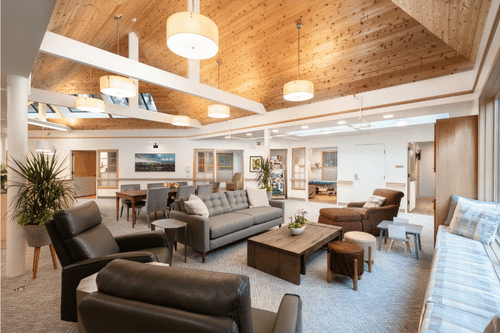
Hopewell House is Portland’s only dedicated end-of-life residence, and their newly reopened home is surprisingly comforting. Everyone who works, volunteers, or visits ultimately feels it.
The beautiful 1927 Tudor-style house, a rolling lawn nestled in the Douglas fir forest, sets the stage. The friendly volunteer face greets you. Daily homemade soup and baked goods by a cook named “Honey” are available and regularly offered by the volunteers who support running this residential care facility.
Most longtime Portlanders like me have heard of Hopewell House, the hospice that opened in 1986. I grew up regularly driving by the well-regarded hospice in my SW Portland neighborhood. Hopewell reopened this January (thanks to Friends of Hopewell House) just as I felt ready to come out of my Covid hibernation and into a new volunteer experience.
Last week when I walked in the door as a volunteer, another volunteer passed small bowls of flower petals to all. I heard a volunteer harpist playing soothing music, and I realized that I was about to experience my first “walk out,” a ritual that honors a resident who had just passed. We all stood quietly and sprinkled the petals on the resident as they were escorted to their personal resting place by a few family/friends. A handmade quilt sewn by volunteers and offered to each resident covered the body.
Following the loving escort, the three family members returned inside and gathered at one of the many dining tables. I was there to ask them if they would like one of Honey’s signature dishes. Initially, they declined the offer but later changed their minds, letting me serve them various homemade items made earlier that day. As I brought out the mouth-watering comfort food, I thought to myself that Honey was a perfect name for one of Hopewell’s cooks. Her food reflects Hopewell’s motto of “living well in the presence of death.” Unsurprisingly, one of the family members stated, “I hope to be back to Hopewell as a volunteer,” and the twin brother added, “I counted 17 faces. This is a magical place. Thank you.”
Yes, this place called Hopewell House is back and doing this magical work for Oregonians and those from other states where the right to die is not legal. I am honored to be invited to volunteer and proud to be one of the thousands of volunteers who give their time to this very special place.
Visit Hopewell House for more information.
 Aging with Advocacy, LLC